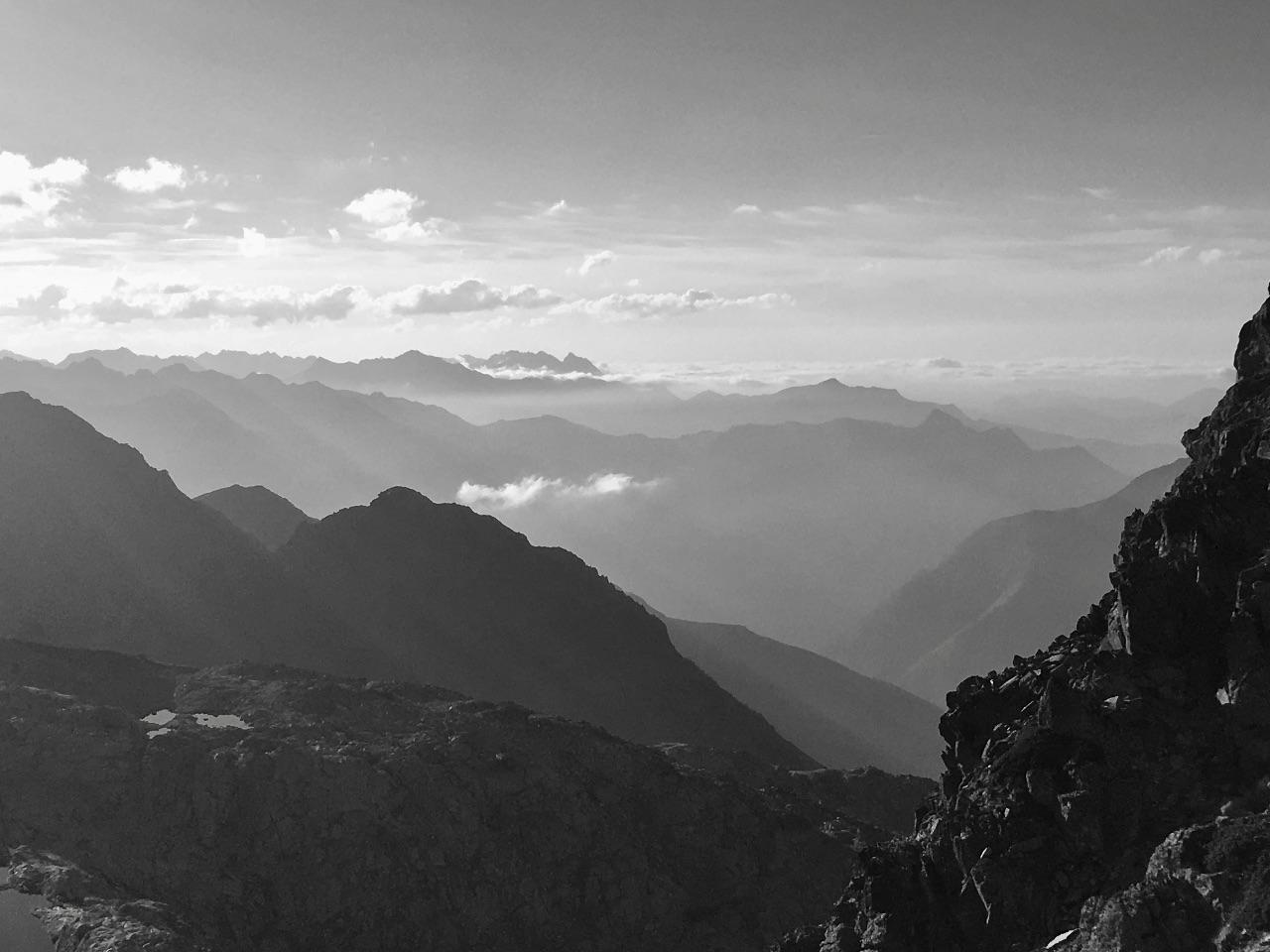
Thoughts as the wind blows

Long time, no writing. I started this blog during Covid in 2020, when I had plenty of time to reflect and put thoughts on paper. That opportunity has not reproduced since then (quite the opposite with Russia's war of aggression against Ukraine, a real defining time that I may address). But an unexpected turn of events gave me again the opportunity to sit at home for quite a while. I should probably start there.

I had the misfortune to injure myself recently. I wished I could claim that some virtuous action led to this outcome (preventing someone from falling, running away from shelling, mountaineering… ), but no, it was a non-event: a fall in my bedroom while rushing at night to close the window that I forgot was open as a storm had started. I could not see that water had already soaked the floor by the time I ran in.

The subsequent visit to the ER quickly led to the verdict: trimalleolar break of the right ankle. For the non-medically savvy, it is basically like breaking the three elements linking the foot to the leg. I somehow managed to break the three elements “holding my foot”. It was somehow surprising to the doctors who kept asking me to repeat how I had done that... I am very grateful to my doctor friends who kept translating for me in plain words what the sibylline medical reports, X-rays and scanners said (in Dutch).

The following ensued: surgery during which a plate and several screws were put in my foot to make it hold, to be followed by a period of two months at best during which I cannot put my foot down. Then begins a long healing process spanning several months. It took me some time to digest the news at the beginning of summer (my boss joked that it was very considerate of me to do this on the last weekend of June). I first thought that the surgery behind me, I could fly the next week for a work trip. It took a few stern remarks from the surgeon to land and realise that I was not going anywhere any time soon. Then came the realisation: after the surgery, the hospital nurse helped me rent a wheelchair. I must admit that I had some reluctance to go down that path: me, in a wheelchair? Nah… I am the guy jumping from boulder to boulder very confidently with a heavy backpack. Quickly though, realising it was hard to move beyond a couple of hundred metres with my crutches, I gave in.

I am still in the healing process, but I've already learned a lot. Not having the use of a leg translates into different aspects you do not necessarily realise: on crutches, you cannot carry anything or very little, in a bag hanging from them or in a backpack. Moving a cup of tea or a glass of wine across the room? Forget about it. A wheelchair gives you more flexibility, but even my large and comfortable 100 square metre flat suddenly feels very tiny. I cannot use the chair indoors without having to reorganise everything (which I didn't). Although my residence is quite modern, with a large elevator, I realised that a very small step of just a few centimetres at the entrance that I had not even noticed prevents me from exiting my home and coming back in the wheelchair without someone's assistance (I can't imagine living in a small flat without an elevator in Paris… ).

Speaking of assistance, I do not know how I would have handled that alone. You suddenly become dependent on people, something I am not accustomed to. Thankfully Mila has been there helping and she has done so very gracefully, without the least complaint. I am very grateful, but I am ashamed of the number of things she has to handle for me. I can hardly cook and generally I get tired very quickly. I would have given up on quite a few things had she not been there to help or do them for me.

Another discovery is how you see things from a wheelchair and how you are perceived. Most people have treated me with a lot of kindness and very often offer their help. I remember with deep gratitude this Uber delivery guy racing by to deliver an order on time who, when he saw that we were stuck at the doorstep, immediately stopped and rushed to help roll me indoors. Everywhere I have been, people have tried to accommodate and never made me feel that it was cumbersome. I am quite certain that this is the result of many decades of education and actions to raise awareness. I am also conscious that I live in Belgium, which is a privileged place to be living with reduced mobility. Yet, even in a society where a lot is thought through, where you get access for free, you come to realise that there are so many drawbacks that still are a barrier for you to simply get out, not even mentioning the additional financial cost associated.

Having a physical disability entitles you to reduced fares, but getting to the exhibition or activity probably costs you more. A taxi with equipment to carry a person in a wheelchair is more expensive and even if you can sit in a normal seat, you will have to order a large car where your chair will fit, again at a cost. The mental charge of planning is also heavy: Is this location accessible? Is the path there accessible? Is the sidewalk in good shape? Does the road go up or down and will I be able to roll back? Can I go by myself or do I have to be accompanied? Can I reach public transportation? You probably do not have to ask yourself most of these questions. And these can be enough to discourage you from doing something you really want.

My current disability is only temporary, which is very humbling. I will try to fully appreciate the privilege I have to walk on my two legs, hike, run, bicycle, drive — that is the freedom to do whatever I feel like with little constraints. I will also try to be as helpful to those in this situation and advocate for disability accessibility with renewed vigour.

The wheelchair is used at all times…

The picture is one of a mortar impact on the side-walk in Kharkiv.

With the launch of Russia’s full-scale war of aggression against Ukraine on 22 February 2022, our lives changed for good.

The war had started back in 2014 with the annexation of Crimea and the Russia’s back insurrection in Donbas. But somehow, past the initial shock, most Ukrainians had gone back back to their daily lives. This was probably part of the incredible resilience that they demonstrated to the world later on, that enables them to keep going no matter what. The problem is that it also numbs them to deal with issues before they become critical as well. This allowed Russia to wage a war from 2014 that somehow was deliberately forgotten by most, in Ukraine and in the public opinion of most of the world.

24 February 2022 was a tough wake-up. Everyone was immediately affected and a primal feeling of physical danger struck everyone. Yet, Ukrainians had to somehow adapt and live with this. Moving regularly between Paris and different parts of Ukraine, it often struck me to see the difference of perception about a war depending on whether you are afar or living it in your daily life.

When the war started, it was a huge shock for everyone. This is because you are afraid for your physical safety, because all bets are off, because you have no idea what may come next, what tomorrow -if any- will be made of. You understand without fully comprehending that the life as you knew it is gone and that there are many consequences you do not fully seize as of yet. You also understand that some of these consequences you may not understand because they depend on what is going on.

This is a huge difference between those there and the one far away: while the shock of the war is shared, those who live it quickly have to get on with their lives. Although absurd it may seem, a person needs to live, have a job, do something. This, actually is crucial if your country wants to have a chance to win the war. You have to have a functioning economy. This leads to behavior that may sound strange from afar but that just make sense.

The classical exemple is the one of the air alerts, which are materialized by sirens. Those are stern, gloomy reminders of the war. They may happen one, twice, twenty times a day. They may last for a few minutes or several hours. They may be followed -or preceded at time…- by shelling, but most of the time, if you are a bit behind lines, it is not uncommon that most air alert come and go without actual kinetic activity.

If you live far from the war, you picture yourself running into shelter whenever As true as this may be, people do not have hours to loose every day so they make a choice of seeking shelter or not. In my experience, very few actually do after a while. People learn a pattern and will make an unconscious decision about whether they need to act upon an air alert. It comes down to a gloomy unconscious statistical game about whether there is a big enough risk to get hit so that you will interrupt what you are doing: your job, groceries, walking your child to the park.

There are tools that enable you to somewhat make yourself an opinion. In Ukraine, there is an app, showing where the air alerts are active in the country. So if there is one plane in the air in Belarus carrying a couple of missiles, most people will ignore the alert as the occurrence of such activities is frequent and the chance you individually get hit is low. If only your region is targeted and that you read in Telegram channels (the other main tool) that 78 ballistic missiles are flying towards you, then it is another story.

This does not mean that everyone will abide by this rule. The striking exemple was probably when we missed an appointment with a real estate agent with Mila to visit a flat and that she got quite mad that we had not made it according to plan. We pointed out the air alert and the fact that the city had actually been hit pretty hard on that day, to no avail.

From the side, you will probably this person as irresponsible. I would not pass a judgment on her, but I will certainly seek shelter if I feel endangered and feel unapologetic about it. But the fact is that a lot of people will not budge and continue what they are doing. This is undeniably dangerous. You may speak of a boiled-frog syndrome. But it is also this kind of behavior that enables a country to fight off aggression.

To some limited degree, it reminds me of Primo Levi’s It this is a Man, depicting inmates in a concentration camp, conscious that they may well all be killed soon, and yet organizing a sort of trade markets of all sort of objects.

Humans get used to anything, and wars are not exceptions. This is neither good nor bad. This is the way it is.

Serendipity of a shelling provoking a full blackout: you can gaze at the Milky Way from downtown Lviv

Normal abnormal in downtown Kharkiv: air alert is on but life goes on.

Bon appétit and may this evening be calm!

Discuss...

Bivouac in front of the North face of the Vignemale, in the French Pyrénées

Backpacking in the mountains just makes me happy. I have been in the mountains since I was quite young. Undeniably, the fact that my father repeatedly took me to the mountains during my childhood contributed to this.

Read more...

This question is an important one for people who travel and live abroad, like me. The knowledge that you have some roots somewhere is what enables you to get very far feeling very comfortable. I think about this question a lot.

Read more...

Just a few minutes after landing in El Calafate, the decision was taken: there would be no return to Buenos Aires as we had originally planned. Instead, we would head further down south, to Ushuaia. I used the island of 3G connection there to book the new tickets. This thought, which had not occurred to me looking at a map from Kyiv, now seemed obvious...

Read more...

A guanaco with the lake Viedma and the Fitz Roy behind

This was an unforgettable trip. Initially, when we had arrived in Buenos Aires, the plan was to spend a couple of days in the capital, then head to El Calafate for three days and then fly back and probably head north. The tickets were bought. We flew during the night to El Calafate and landed at six in the morning after four hours of flight...

Read more...

When it comes to spectacular mountain landscapes, the Dolomites in the northeastern part of Italy, are probably one of the most striking I have been given the chance to wander in. These pre-Alps limestone reeds are not particularly high, but they are usually nearly perfectly vertical. This give to the Dolomites a unique look, almost human-made, architectural.

Read more...

Spectacular Svaneti

I would not say that I know Georgia well. I travelled there only twice, one of them for less than twenty-four hours. The first time was a business trip, on top of which I added some ten days of vacation. We headed to the Svaneti region, as the Tusheti, reportedly wilder, was not yet accessible from Tbilisi due to the high passes still blocked with snow.

Read more...

View from Chaussenque's gap, Néouvielle
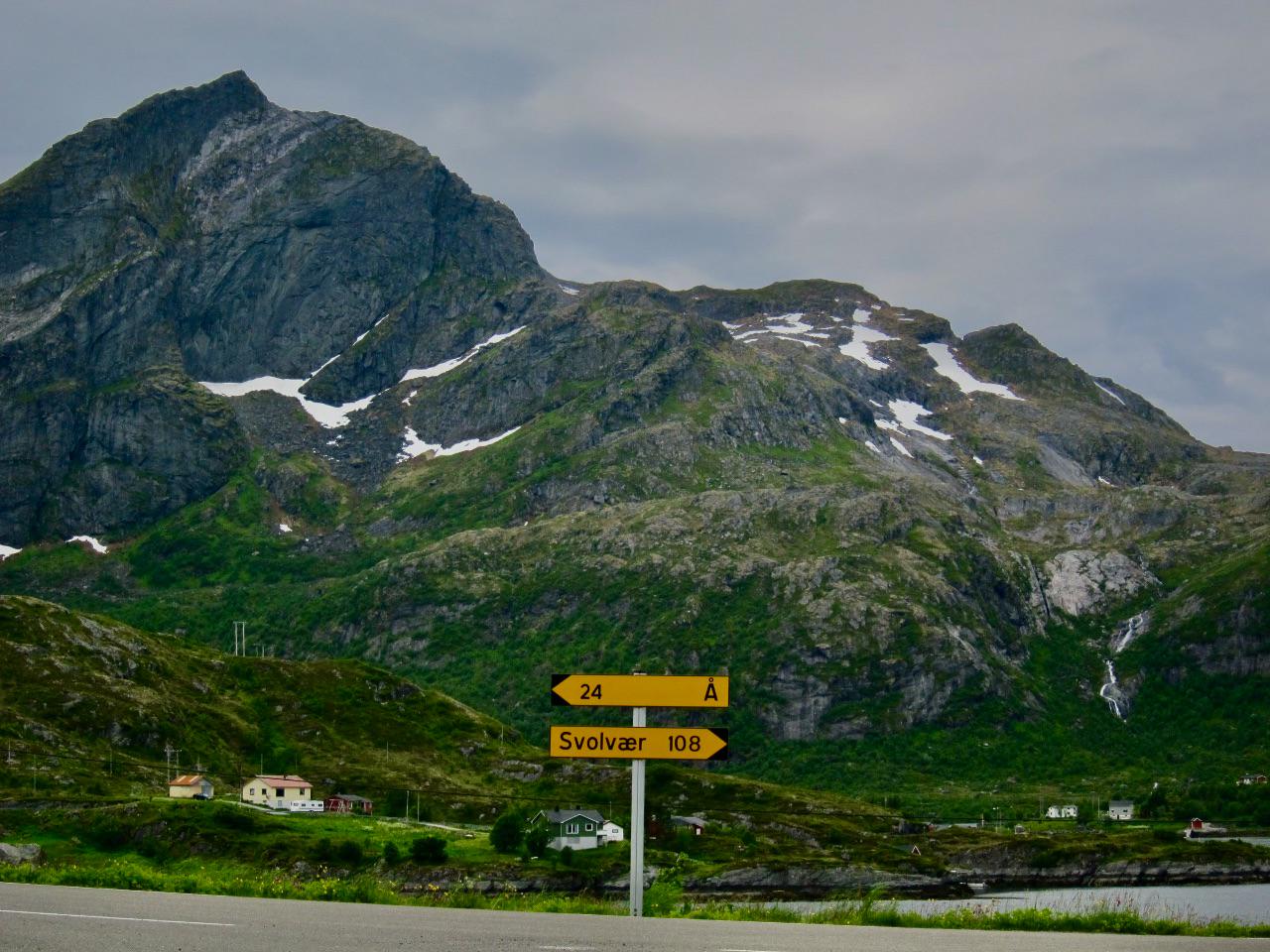
Today, a real challenge: choose only five pictures of my native mountains, where I hiked many years and took thousands of pictures.

Read more...

Å

This was one of the most beautiful places I probably visited. An archipelago, north of the Arctic circle, at the end of the world, with settlements with such surrealistic names, such as “Å”...

Read more...

Enter your email to subscribe to updates.